



與殘疾人士相處小貼士

Tips for Interacting with Persons with Disabilities

No matter how widespread accessible facilities become in society, the core of an inclusive society always lies in mutual respect and understanding between people. Below are some practical tips for interacting with persons with disabilities.

肢體殘疾人士

Persons with Physical Disabilities

Tips for Interacting with Them

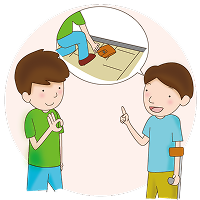
Listen to their needs first, and only offer assistance after obtaining their consent.

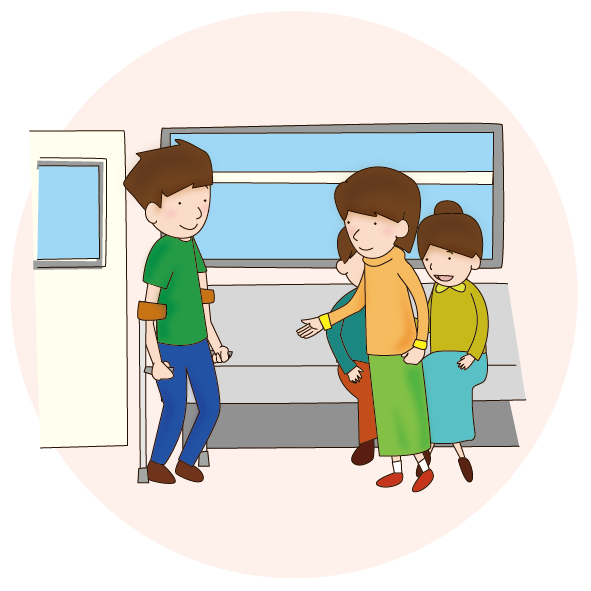
Offer seats to people who use walking sticks or other mobility aids.

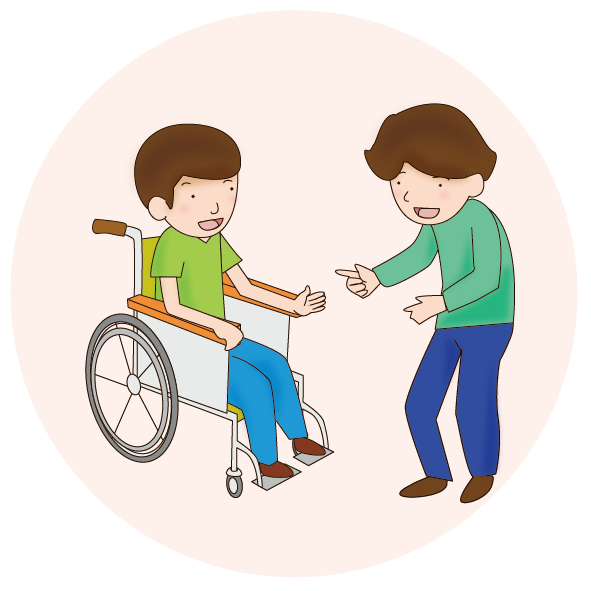
When speaking with wheelchair users, try to sit down or maintain eye-level communication.

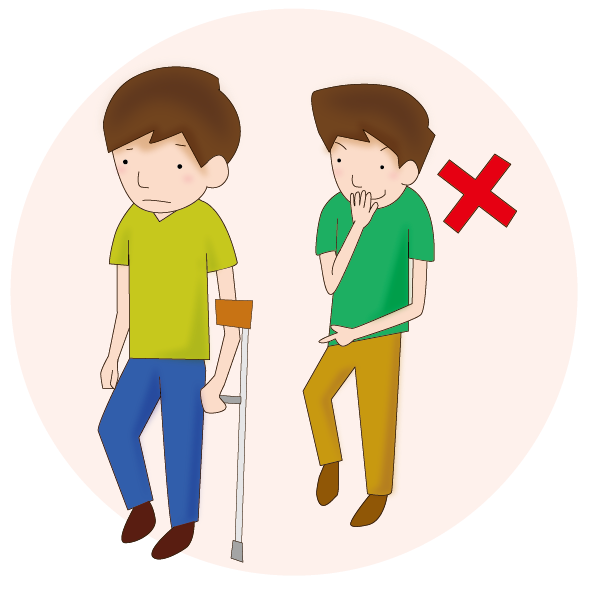
Do not imitate or mock behaviours caused by their disabilities.
Tips for Using a Wheelchair

Opening a Wheelchair

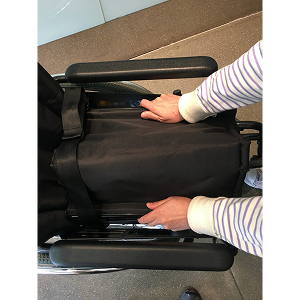
Opening a Wheelchair

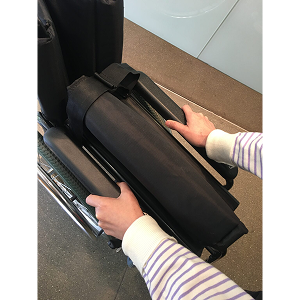
Place both hands on the supports at both sides of the seat.

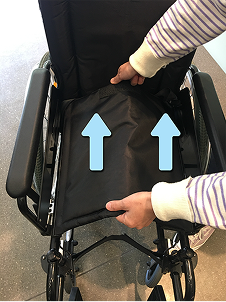
Opening a Wheelchair

Point your fingers inward and press downward to open the seat.

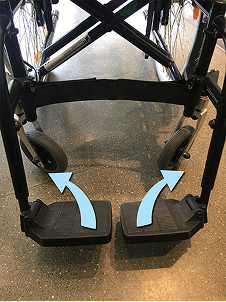
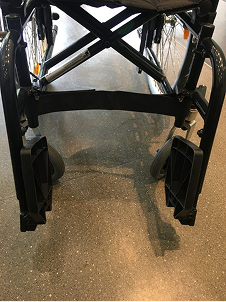
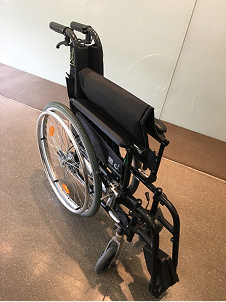
Folding a Wheelchair

Fold up the footrests.

Fold up the footrests.

Important Notes When Pushing a Wheelchair

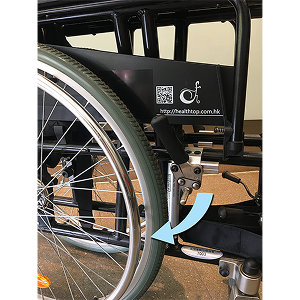
Lock the wheelchair brakes when the user is getting in, getting out, or when the wheelchair is stationary.

Lock the wheelchair brakes when the user is getting in, getting out, or when the wheelchair is stationary.

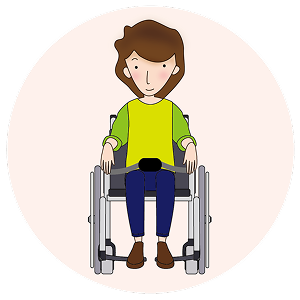
Ensure the wheelchair user’s elbows remain within the armrests and the safety belt is fastened.

Ensure the wheelchair user’s elbows remain within the armrests and the safety belt is fastened.

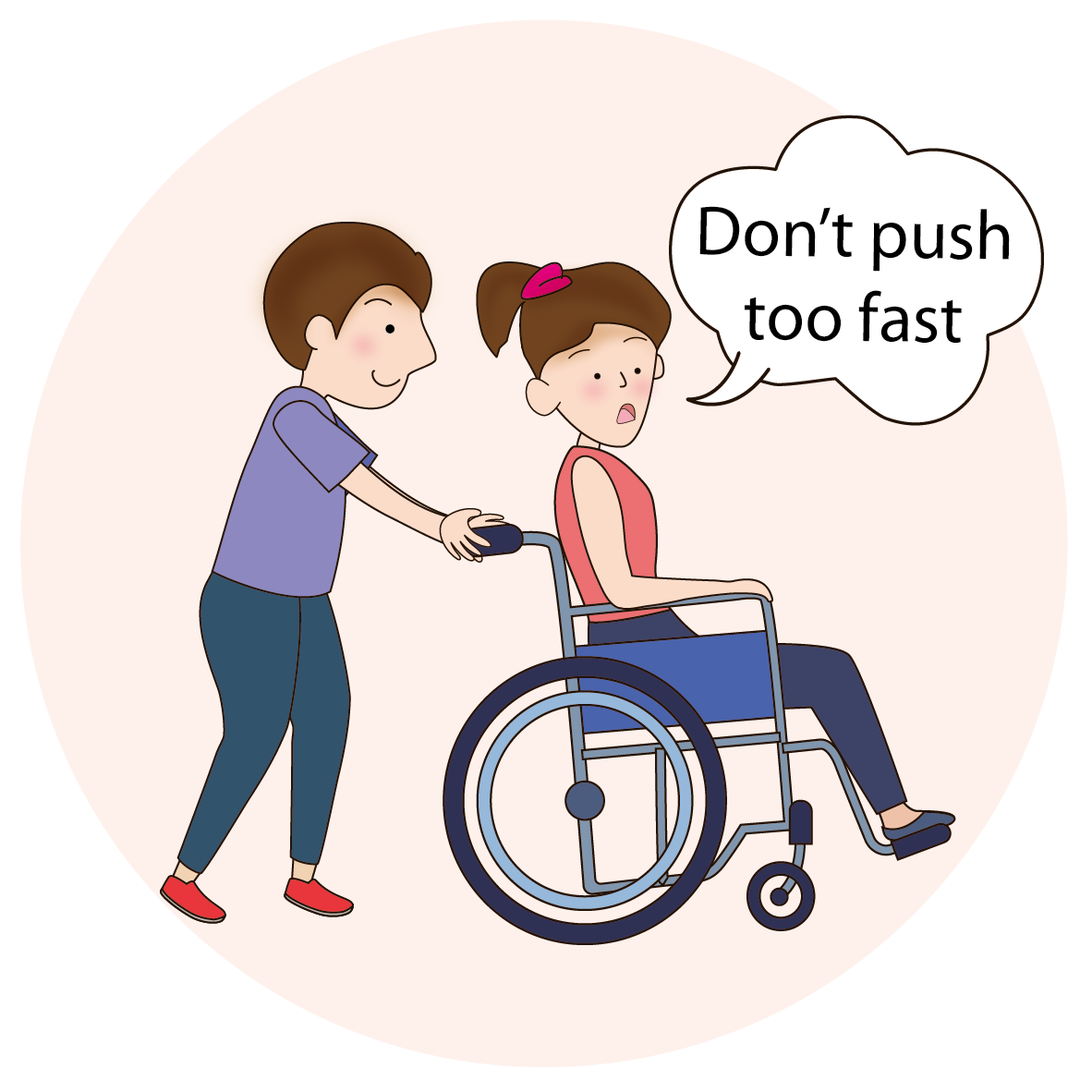
Push the wheelchair steadily and avoid moving too fast or making sudden turns.

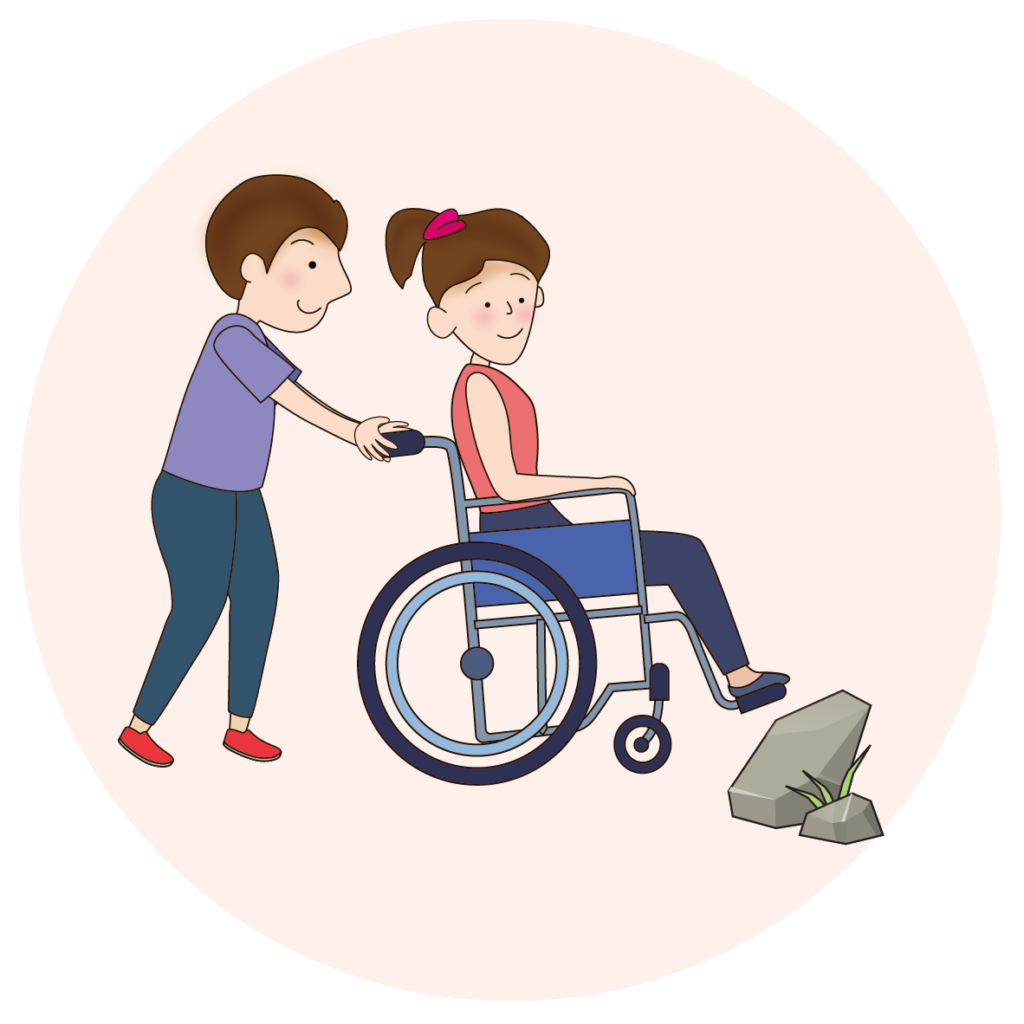
Watch out for obstacles and uneven road surfaces.

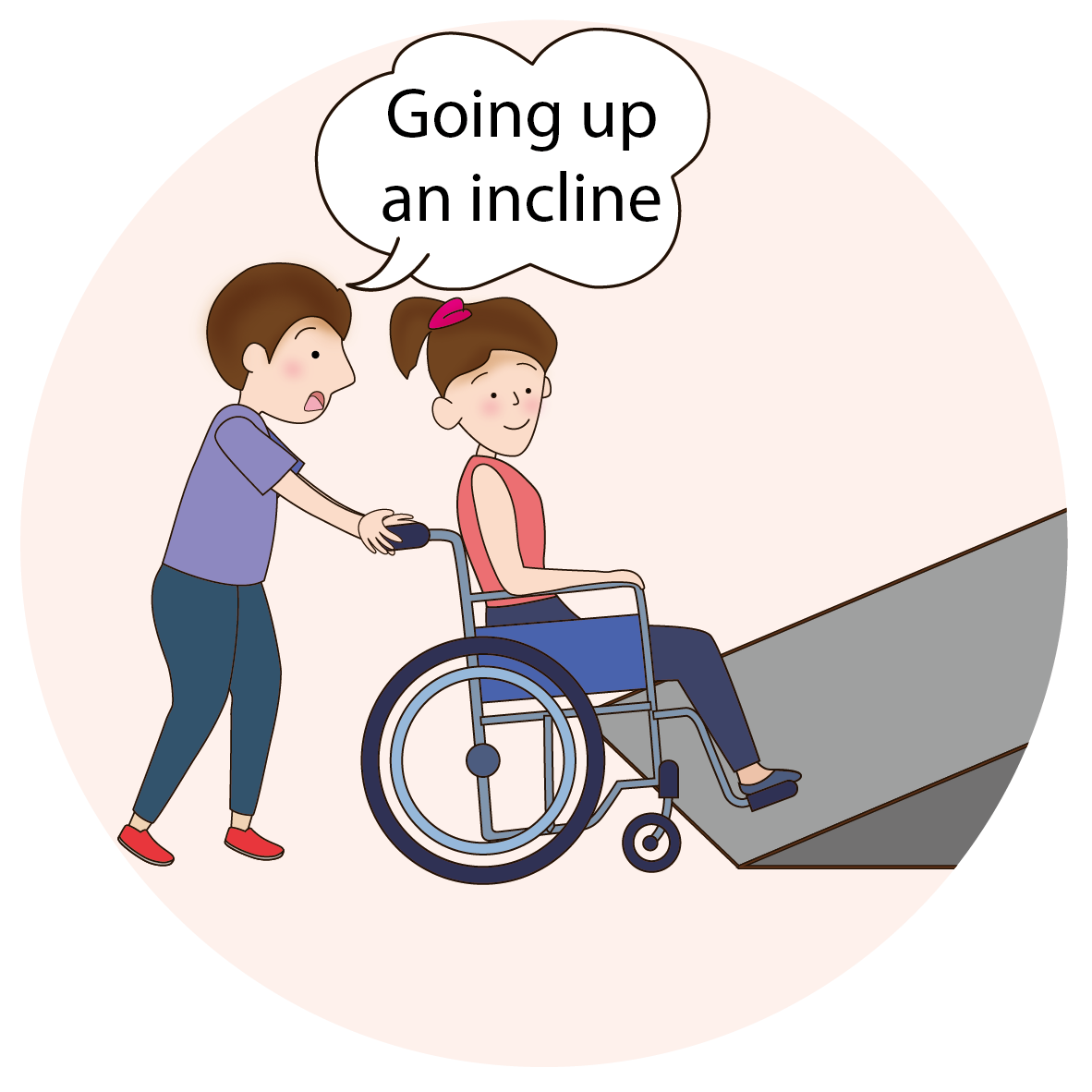
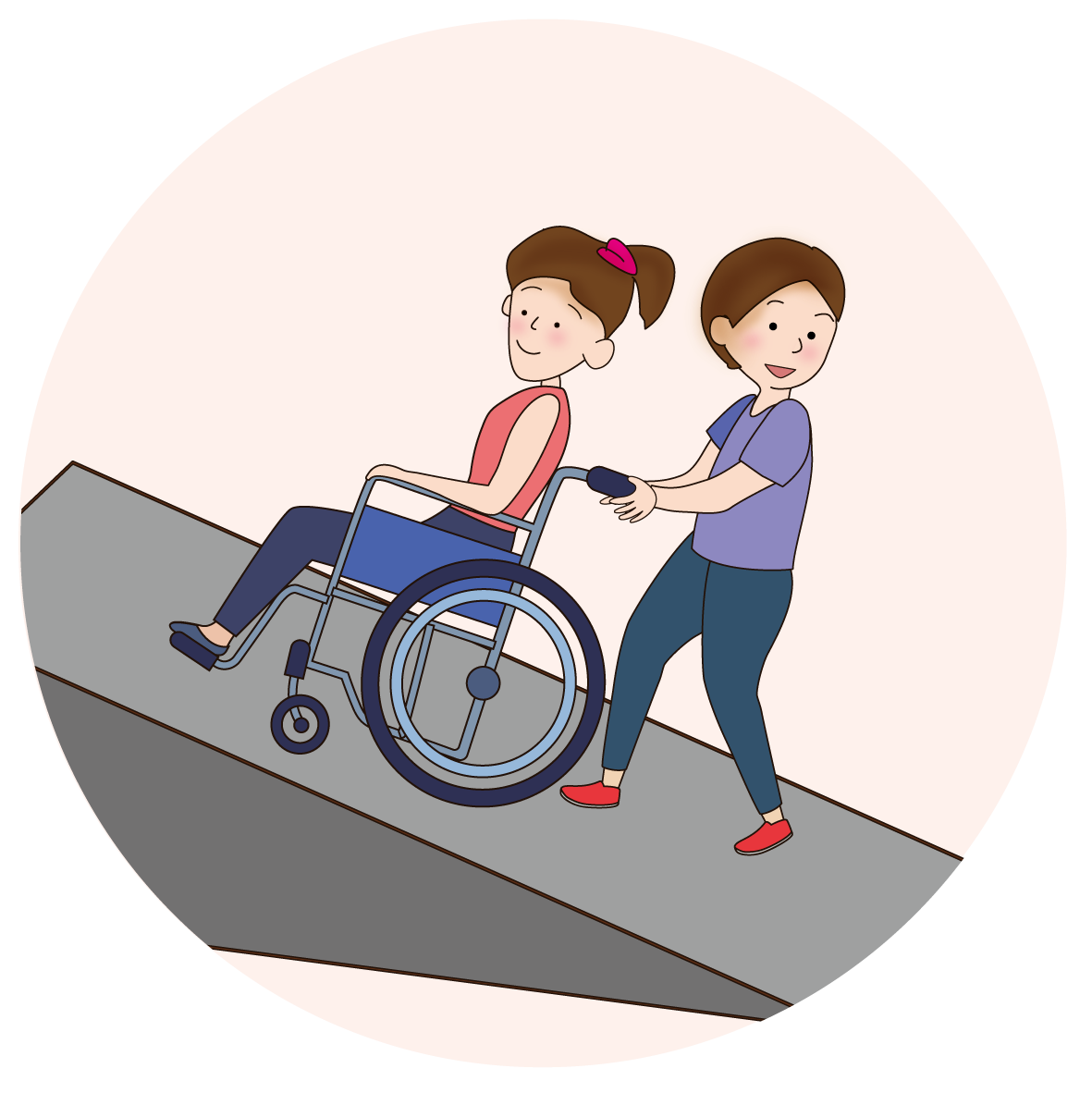
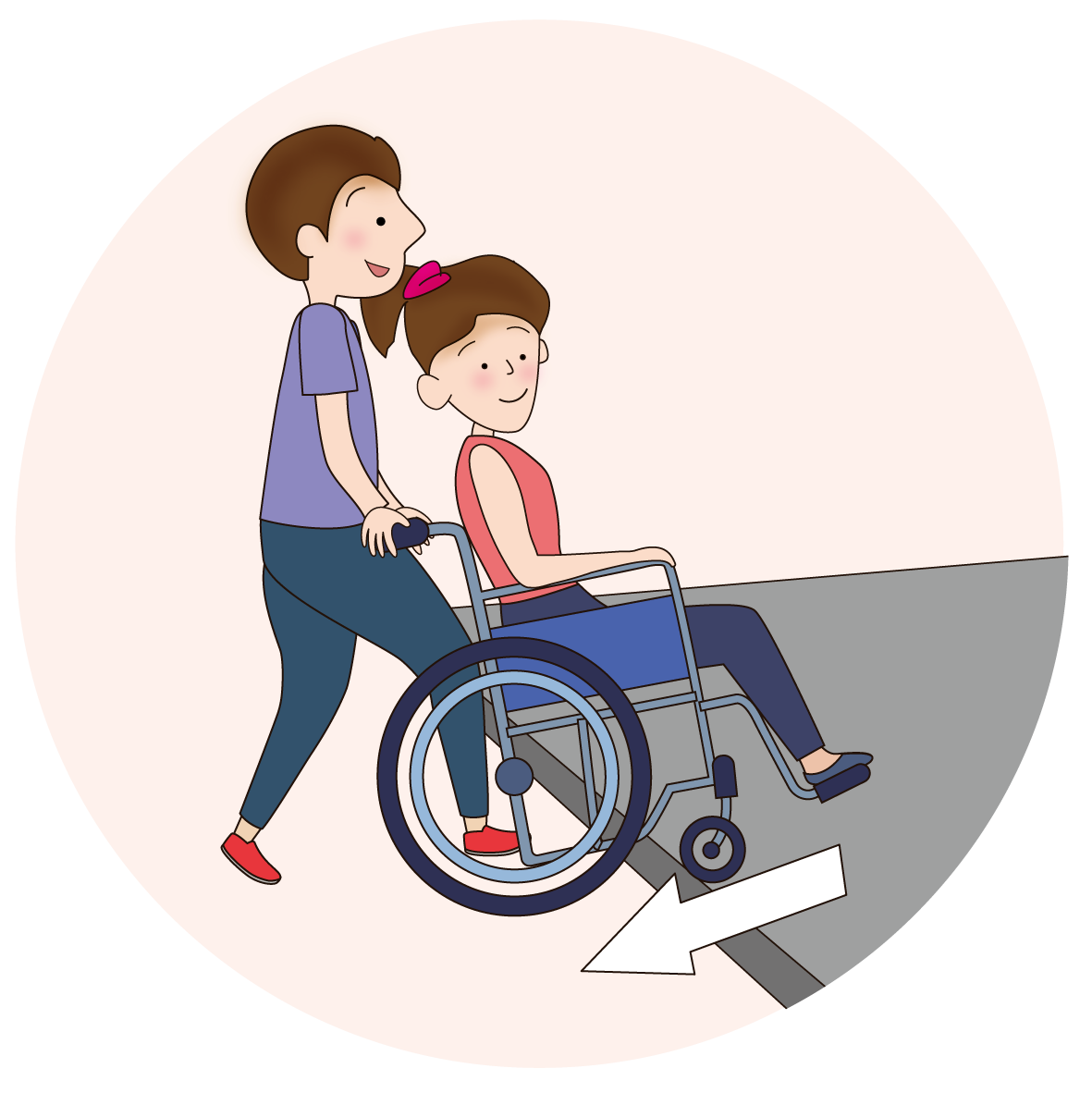
Inform the wheelchair user before going up or down slopes or stairs.

If the slope is steep, the person pushing the wheelchair may walk backwards down the slope while firmly holding the handles and keeping their back straight. Continue checking behind for road conditions.

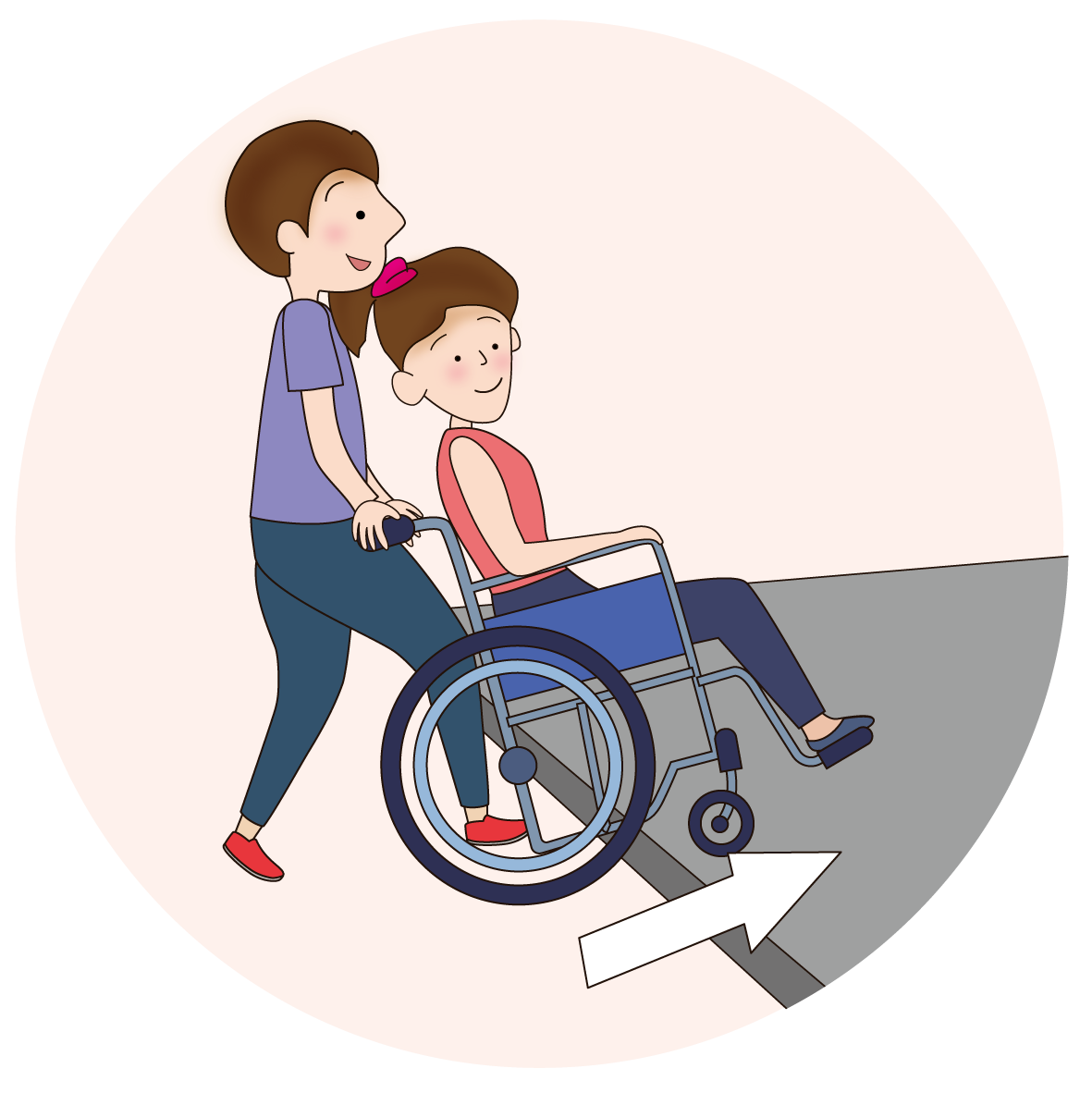
To go up stone steps, push the wheelchair to the edge of the steps. Hold the wheelchair push handle and push down. Step one foot towards the tilting back bar. Tilt the wheelchair backwards and push the front wheel up the stone step at the same time. The person pushing the wheelchair should then place their feet back on the ground, hold the push handle firmly, keep their back straight, and use the strength of their lower limbs to lift the wheelchair and push it up the stone step.

To go down stone steps, the person pushing the wheelchair should turn their back to the steps, pull the rear wheel towards the edge of the step, keep their back straight and bring their lower limbs close to the back of the wheelchair to use the force to pull the rear wheel back onto the stone step. Then slowly pull the front wheel back down the step.

Video

How to Use a Wheelchair Correctly and Safely

視障人士

Persons with Visual Impairment

Tips for Interacting with Them

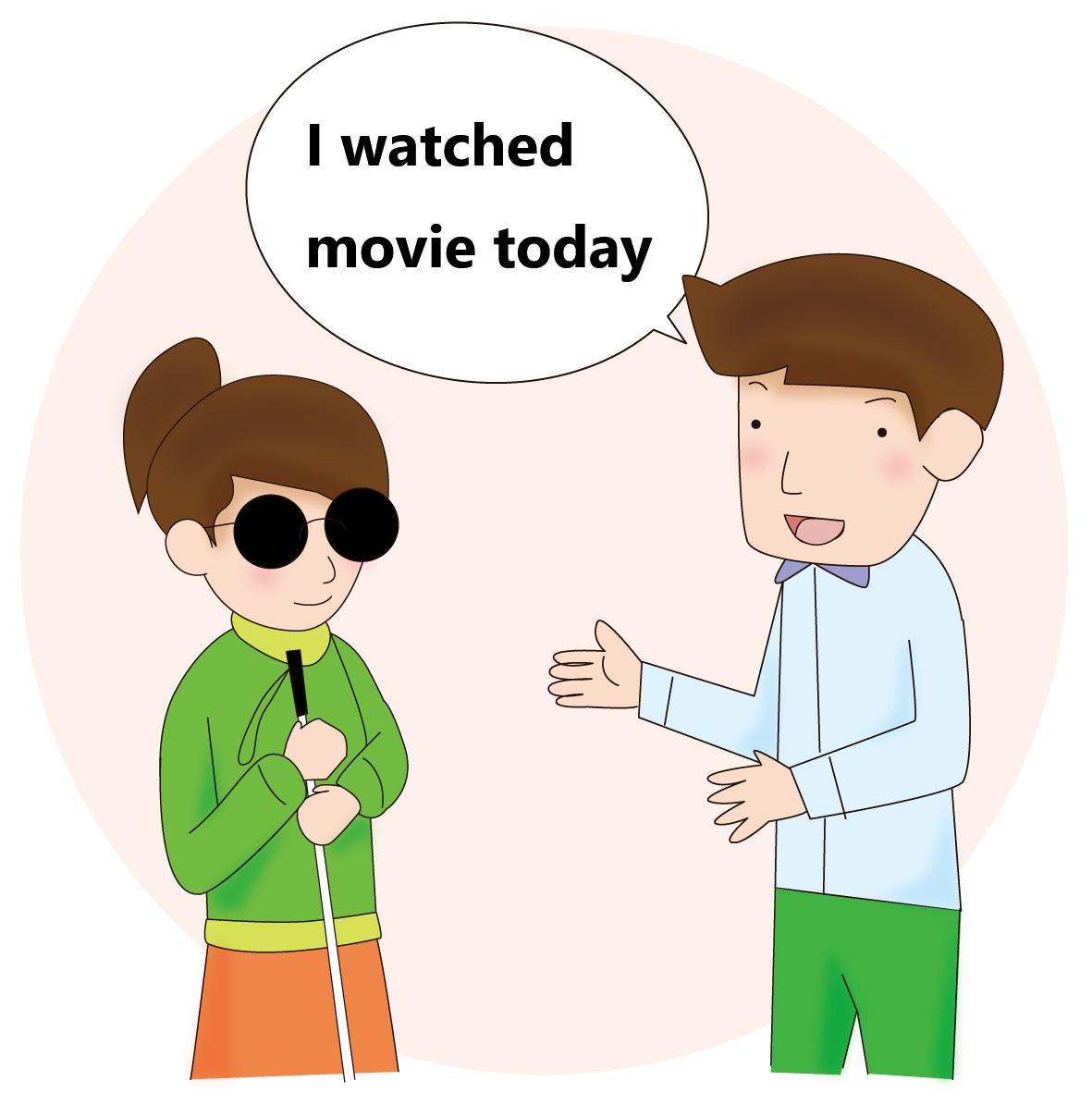
When you are talking to them, you should first introduce yourself and let them know who you are.

There is no need to deliberately avoid using the words “see” or “look”.

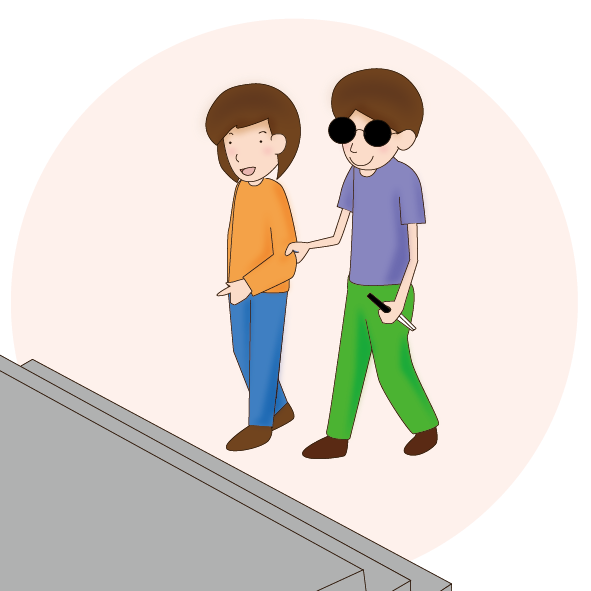
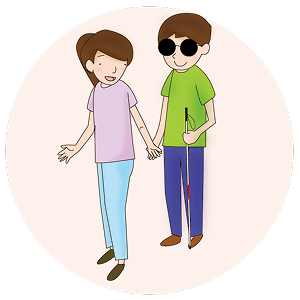
If you are travelling with them, you can let them hold on to your arm or shoulder so that they can tell if they are walking on a road or stairs.

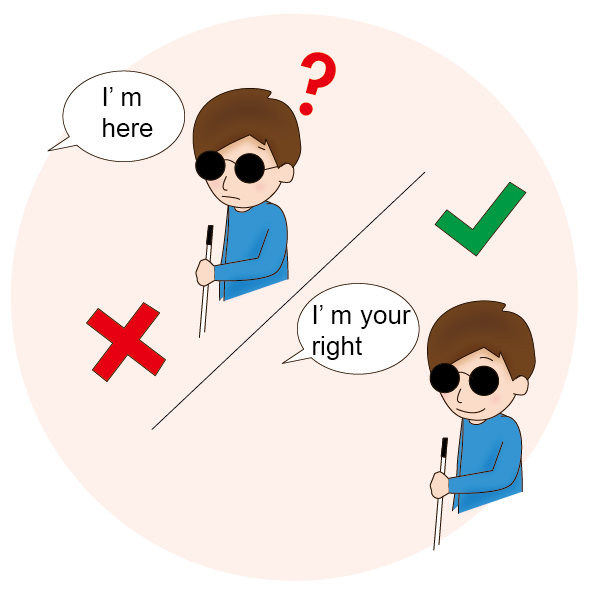
Instead of using fingers or saying “this way” and “that way” to indicate directions, tell them to turn left or right.

Directions

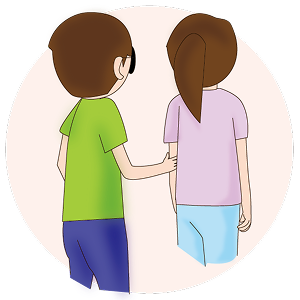
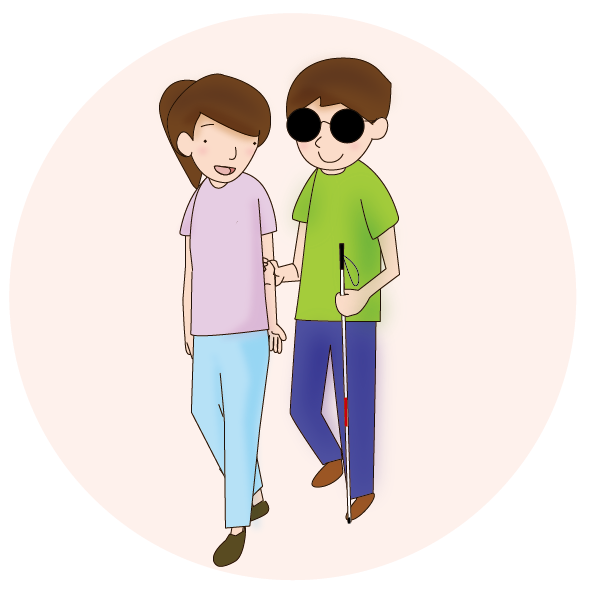
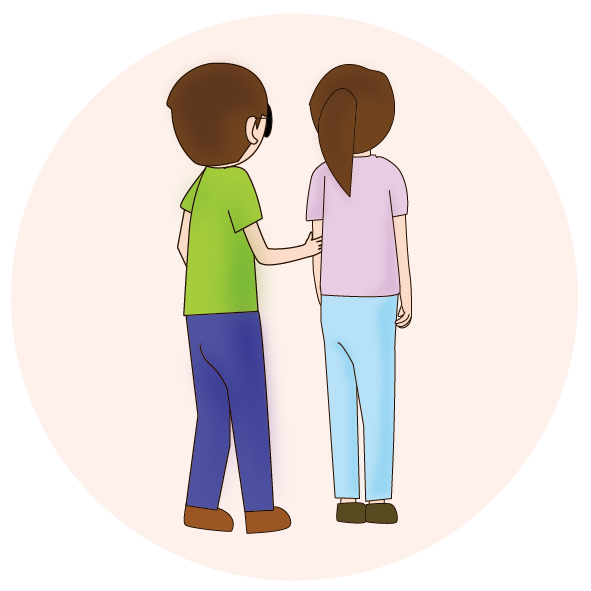
First, tell the visually impaired person that they are being guided. The guide should touch the visually impaired person’s hand lightly with the back of the hand so that the visually impaired person can locate the guide’s position.

The visually impaired person should hold the guide’s upper elbow.

The guide should stand about half a step in front of the visually impaired person.

Walk with the above holding position and distance, keeping an eye on the speed of both parties.
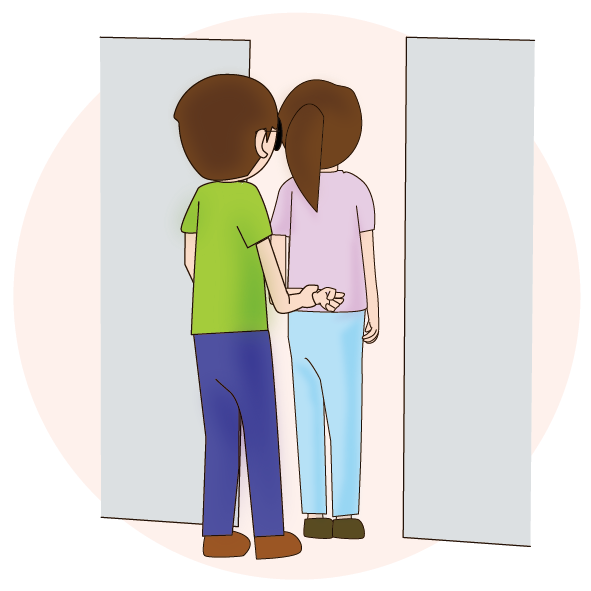
When passing through narrow passages, the guide should bend the arm being held and put it behind the back. The visually impaired person will then switches to holding the guide’s wrist. The two should walk in unison at a reduced speed.

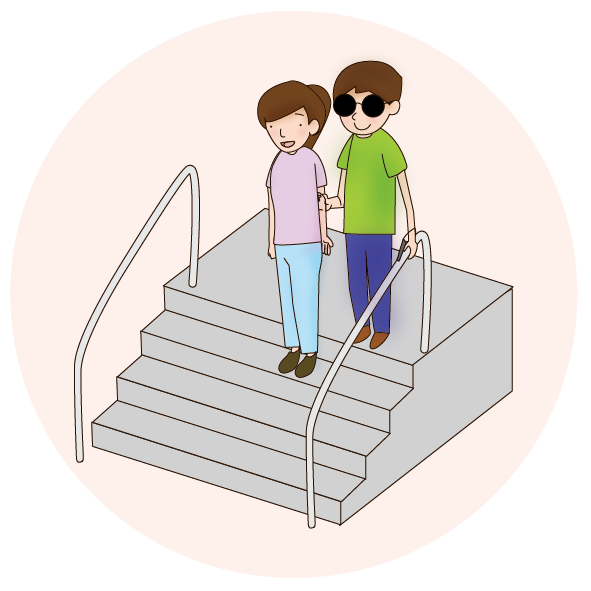
When walking up and down the stairs, the visually impaired person should be told to start walking up or down the stairs. The guide should take one step away from the visually impaired person and place the other hand on the handrail.

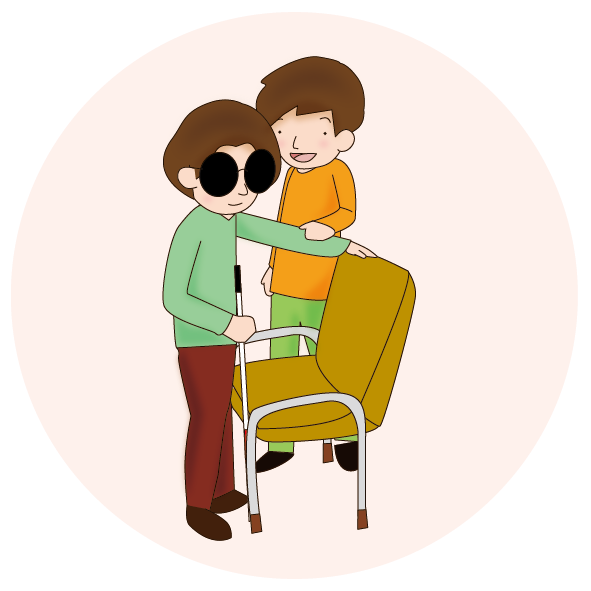
When guiding the visually impaired person to sit down, the guide could lead the visually impaired person to the back of the chair and then allow the visually impaired person to find their way down to the seat.

About Guide Dogs

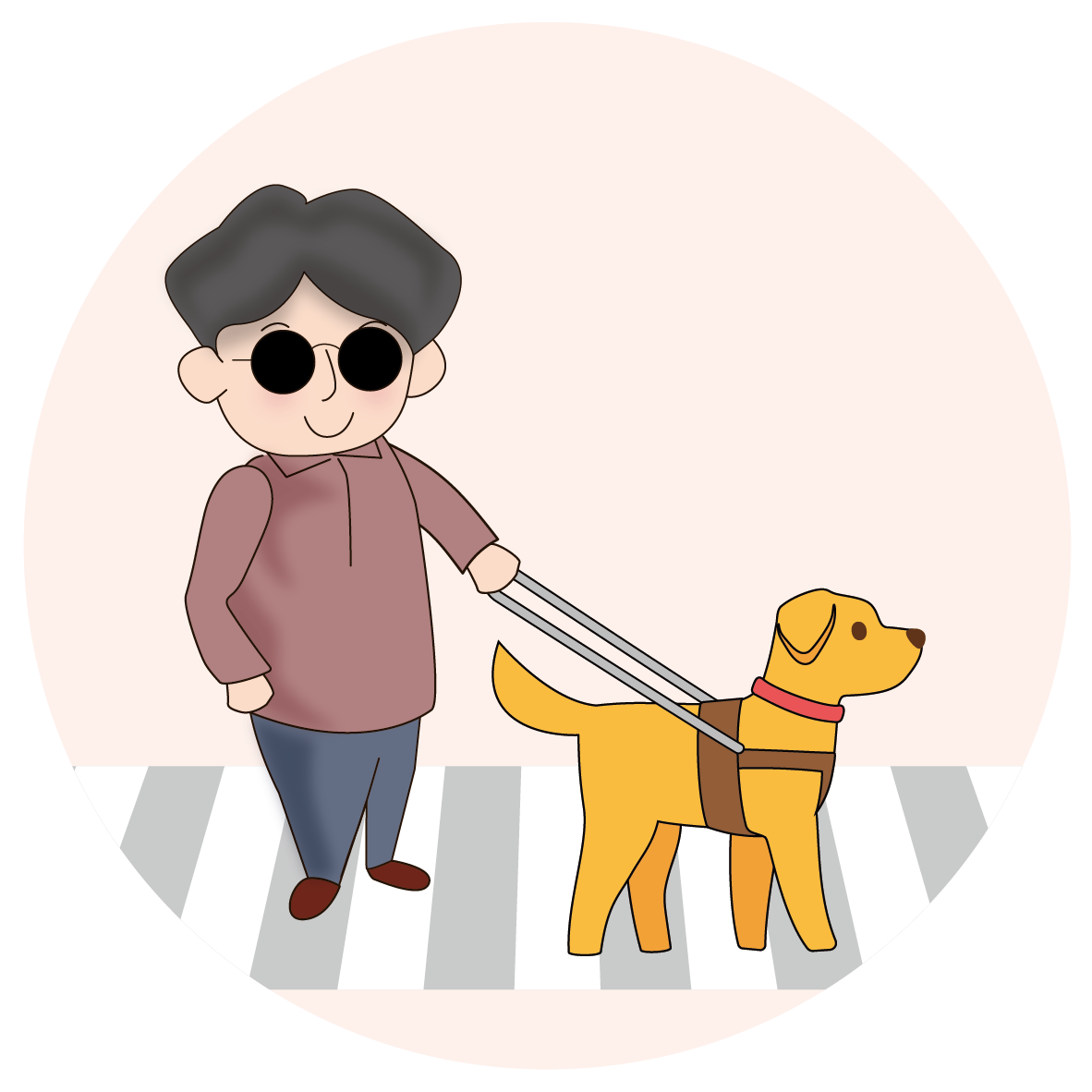
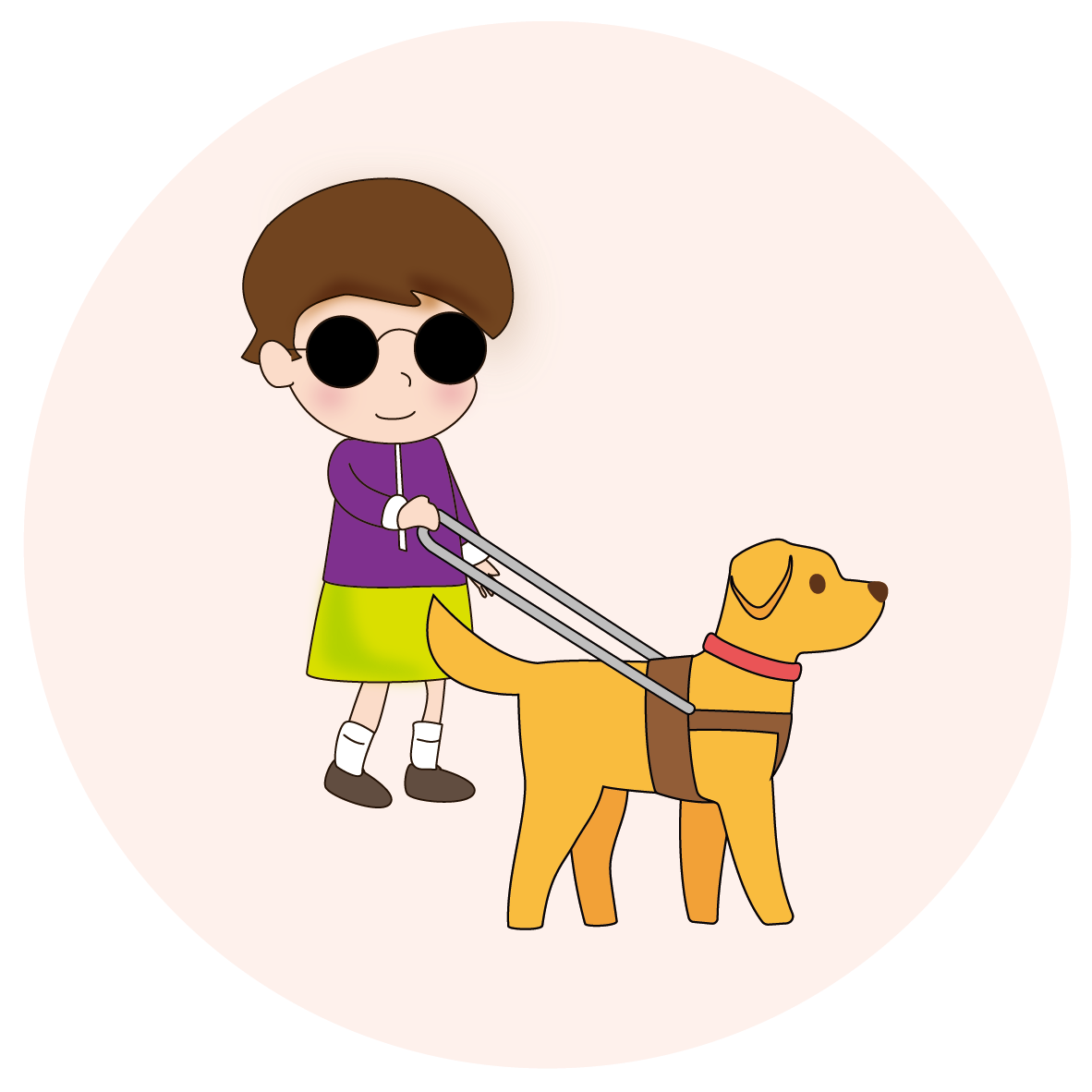
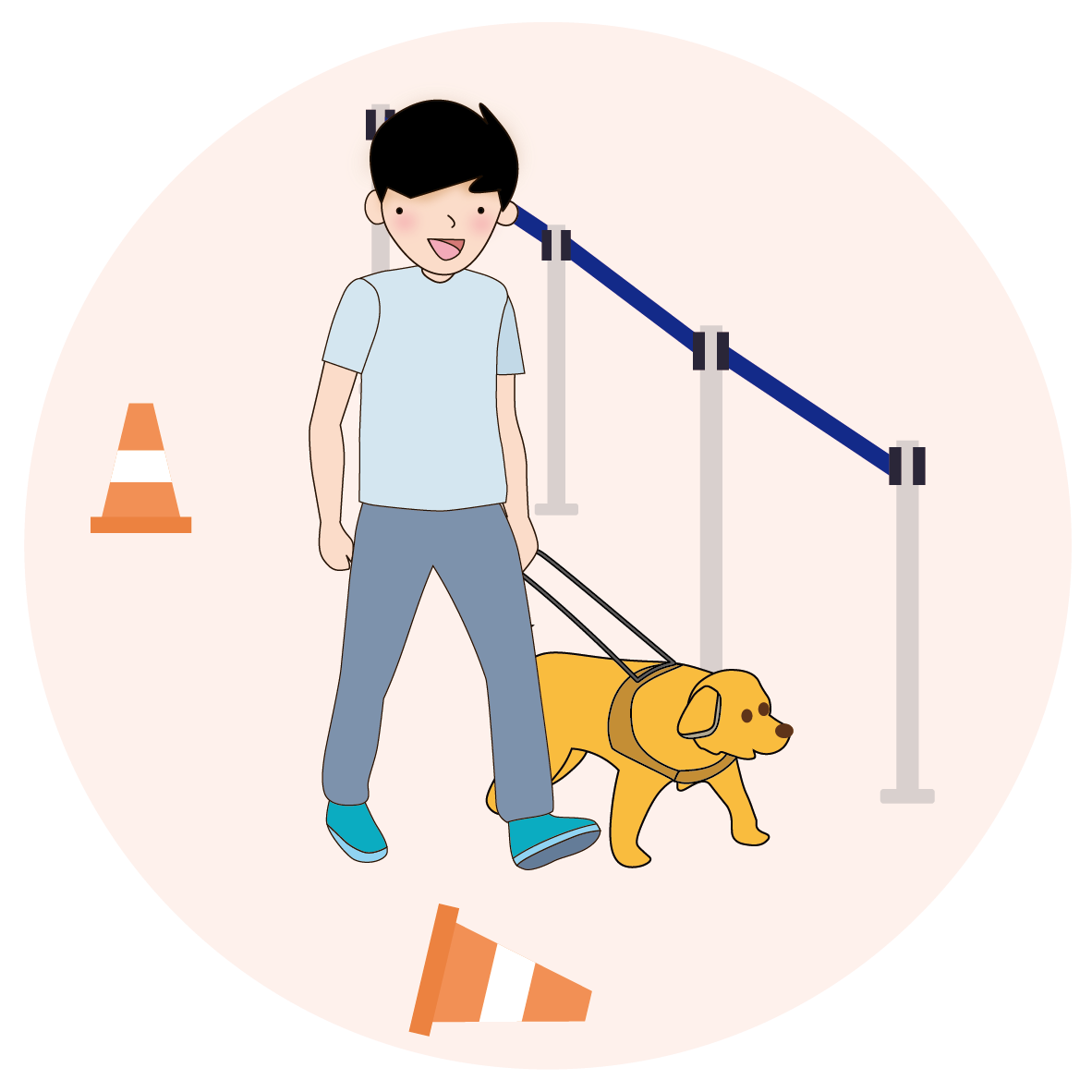
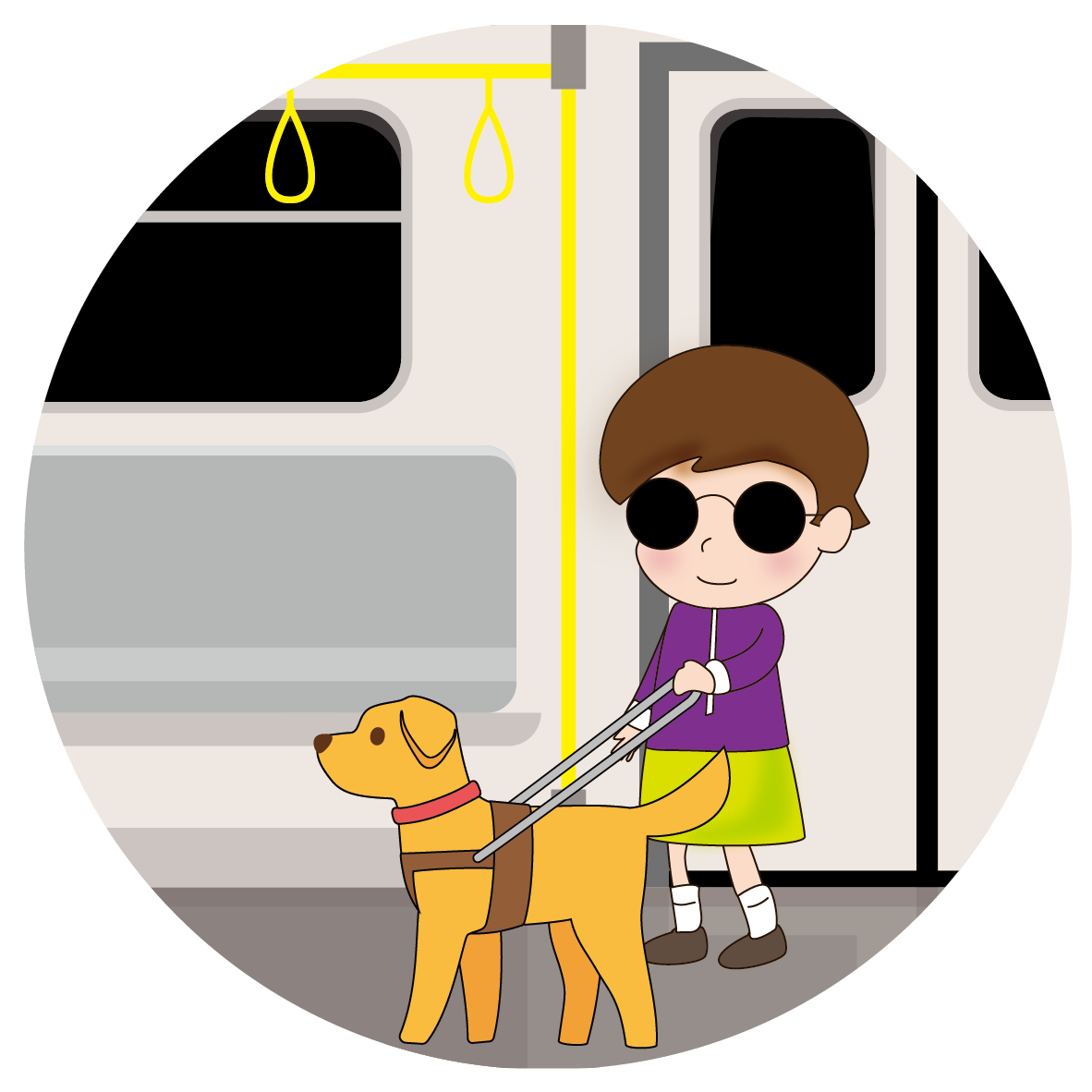
A guide dog acts as a second pair of eyes for a visually impaired person, guiding them along the way.

Guide dogs are not like taxis that take the visually impaired directly to their destination. The guide dog user needs to know how to get to their destination and then instruct the guide dog to go straight ahead or make a turn, while the guide dog is responsible for guiding the visually impaired person without falling or bumping into anything.

It takes a year to train a guide dog, first to learn to stay at home and then to adapt to different environments, such as shops and markets. Dog treats are used as a reward during training to help the dog learn to obey different commands. After training, the guide dog is matched with a visually impaired person. If the two can get along, the guide dog is used to help the visually impaired person go out safely.

“Three Don’ts and One Ask”

Lorem ipsum dolor sit amet consectetur adipisicing elit.

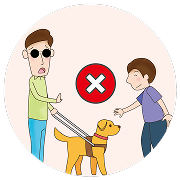
No interference

No interference

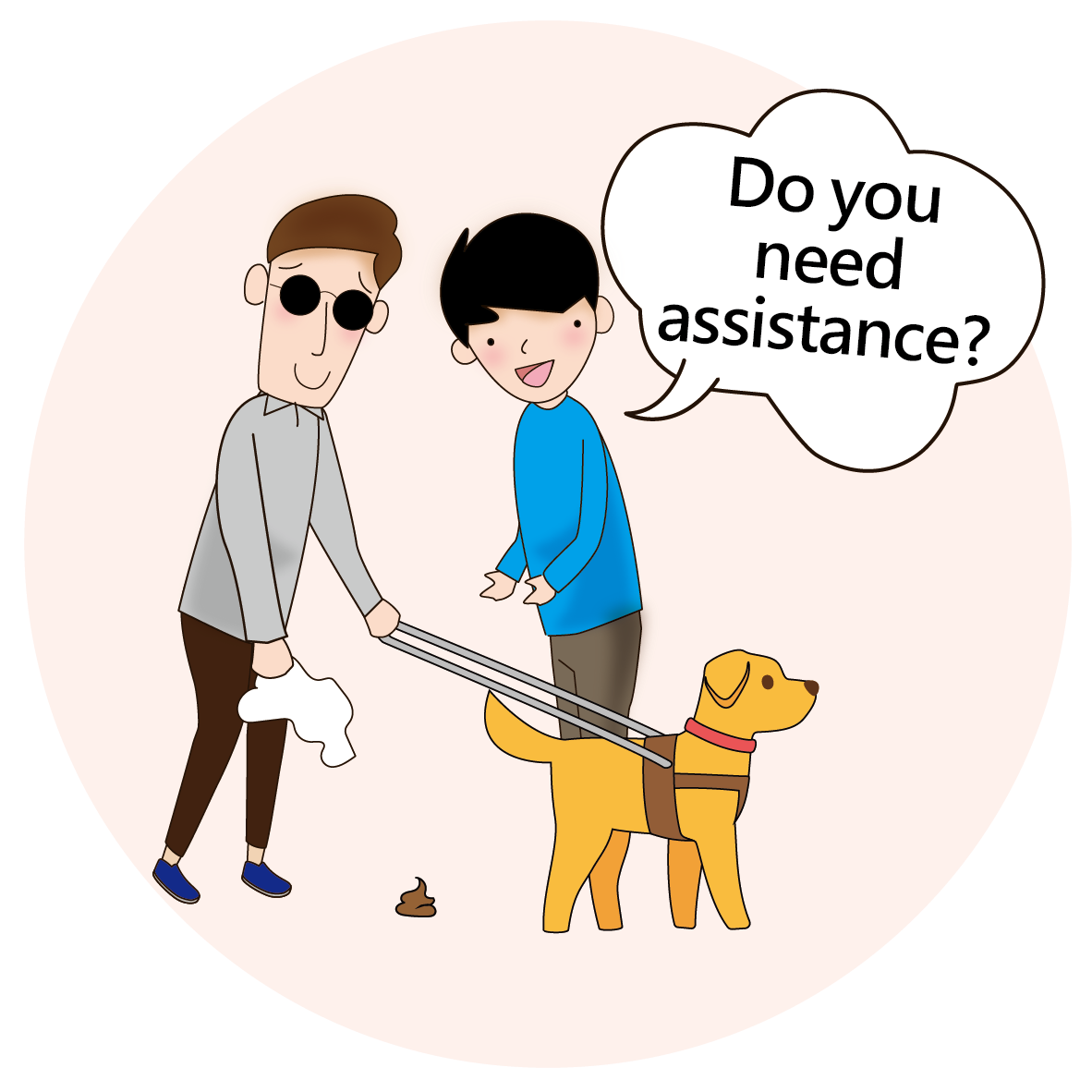
Do not attract a guide dog with noises or gestures, and do not pet it.

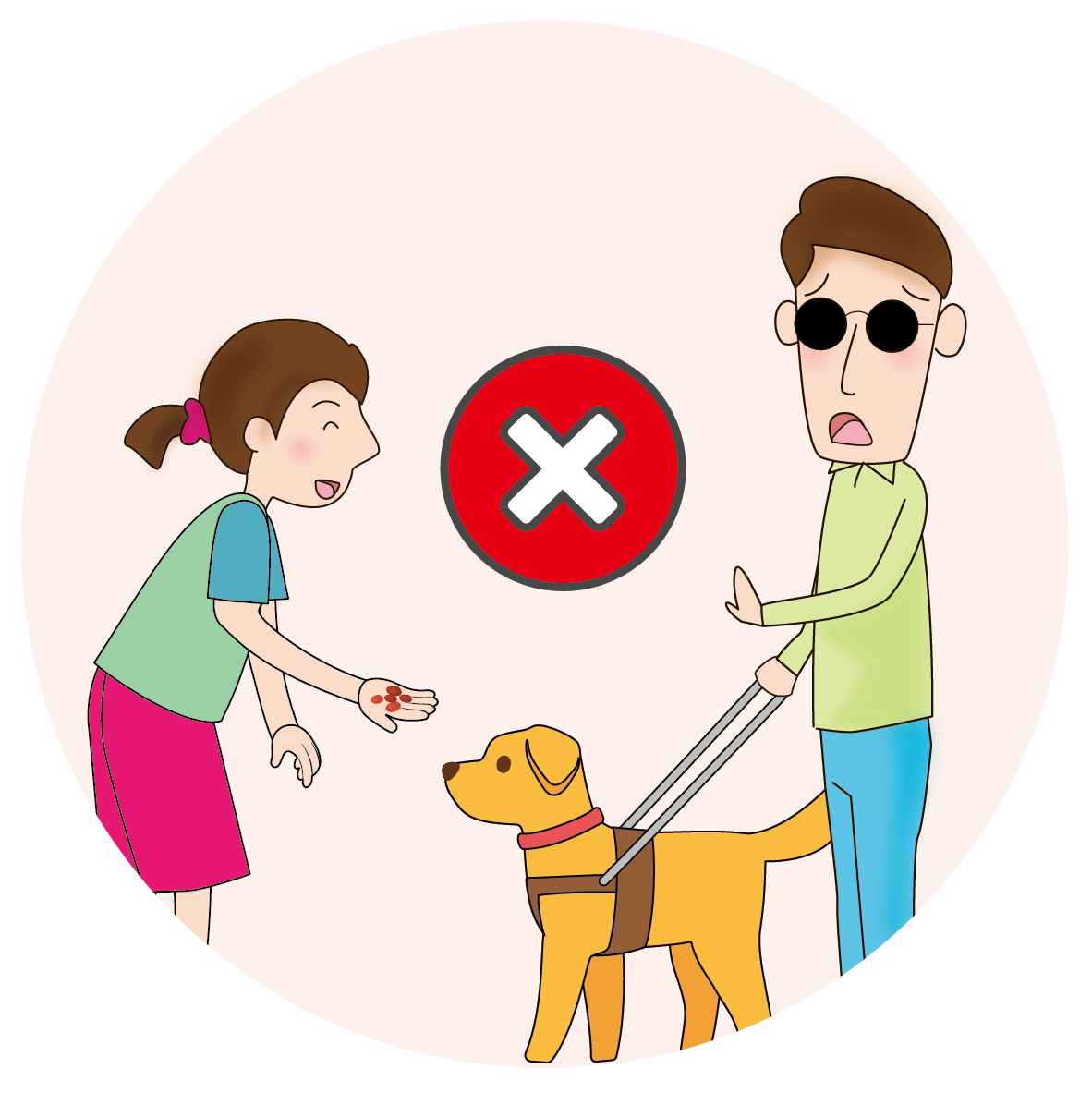
No feeding

Do not attract or feed a guide dog with any food.

No refusal

Guide dogs are welcome in public places.
One question

If you see visual impaired people in need, you can take the initiative to ask them if they need help. If you want to meet a guide dog, you must ask the guide dog owner for permission.

Video

【Getting to Know Guide Dogs】《Barrier-Free Inclusion Guide》 Video 05 ︳[Chinese Subtitles · Sign Language]

聽障人士

People with hearing impairments

Tips for Interacting with Them

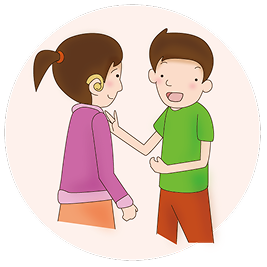
Communicate with them face to face so they can see the speaker’s mouth.

Communicate with them face to face so they can see the speaker’s mouth.

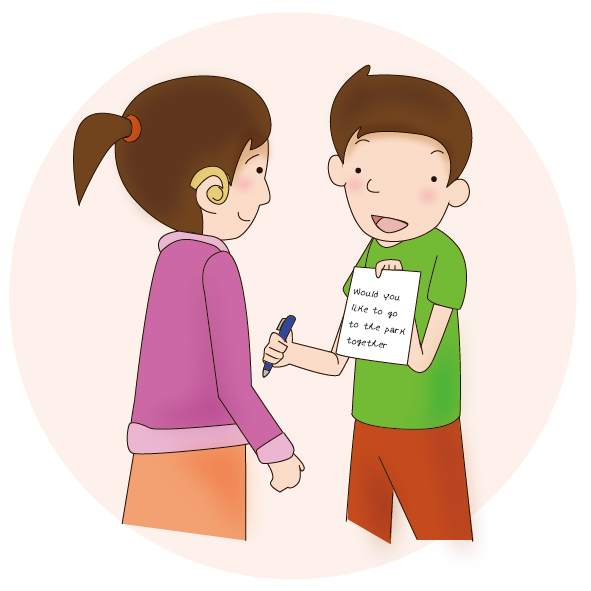
Pen and paper can be used to aid communication if necessary.

About Sign Language

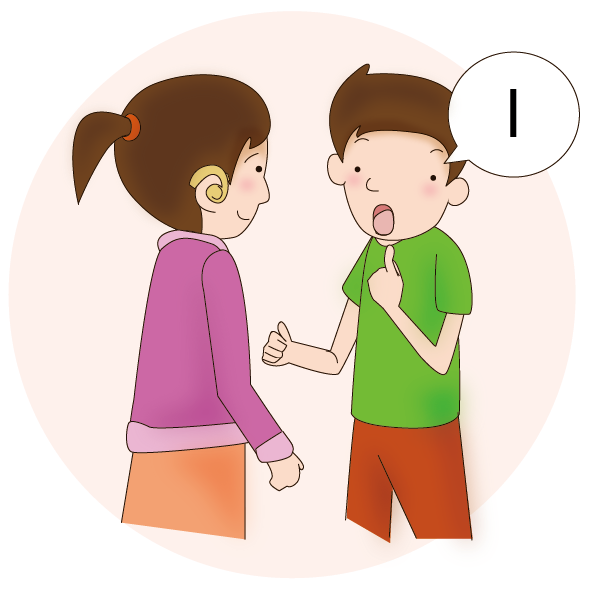
Sign language is a language that uses body movements and facial expressions to convey meaning. It is also one of the primary communication methods used by persons with hearing impairment.

Learning sign language is similar to learning another foreign language. Hearing persons can also learn and use sign language. By learning sign language, we create another bridge for communication and the opportunity to connect with more people.

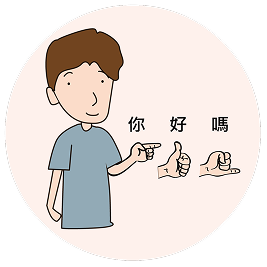
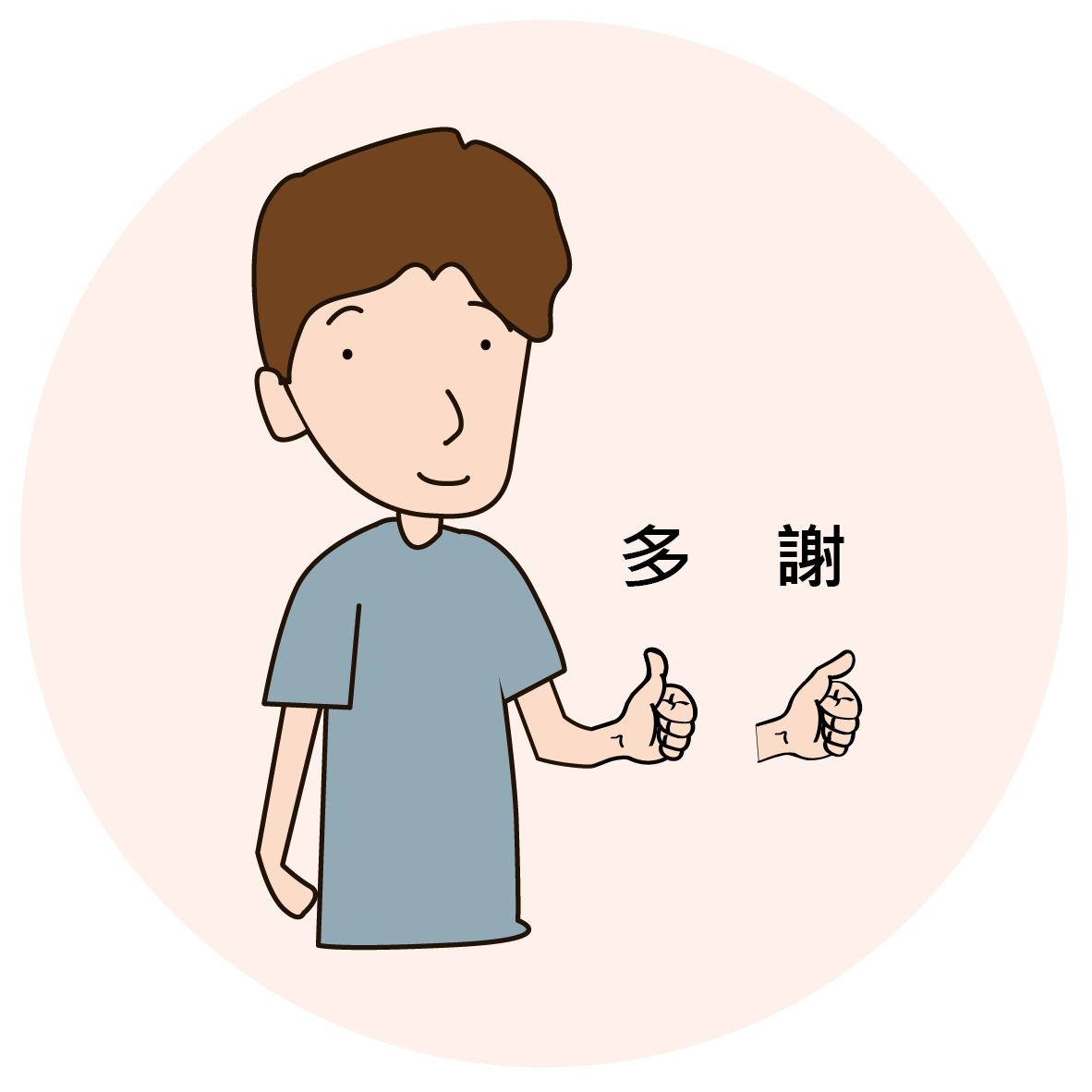
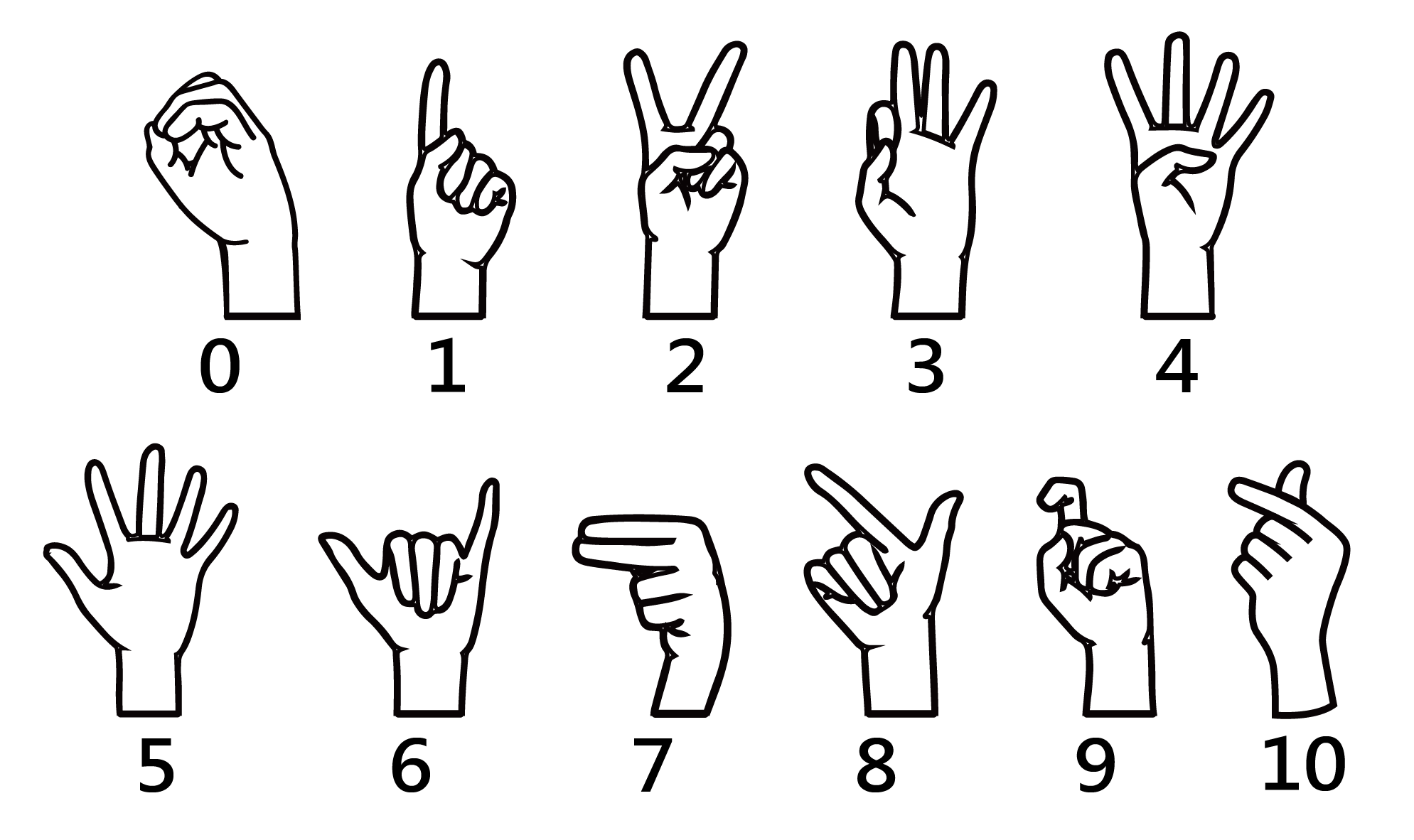
Simple Sign Language

How are you?

How are you?

Thank you.

Numbers

Videos

Is sign language universal? The 5 basic elements of sign language.

同理之心,平常以待

Understand with Empathy, Treat as Equals

In fact, the simplest way to interact with persons with disabilities is to treat them naturally. There is no need for excessive caution, pity, or sympathy. Communicating with sincerity, equality, and without prejudice is the best way to build meaningful connections.
【How to Get Along with People with Disabilities】《Barrier-Free Inclusion Guide》 Video 06 ︳[Chinese Subtitles · Sign Language]

This site is registered on wpml.org as a development site. Switch to a production site key to remove this banner.