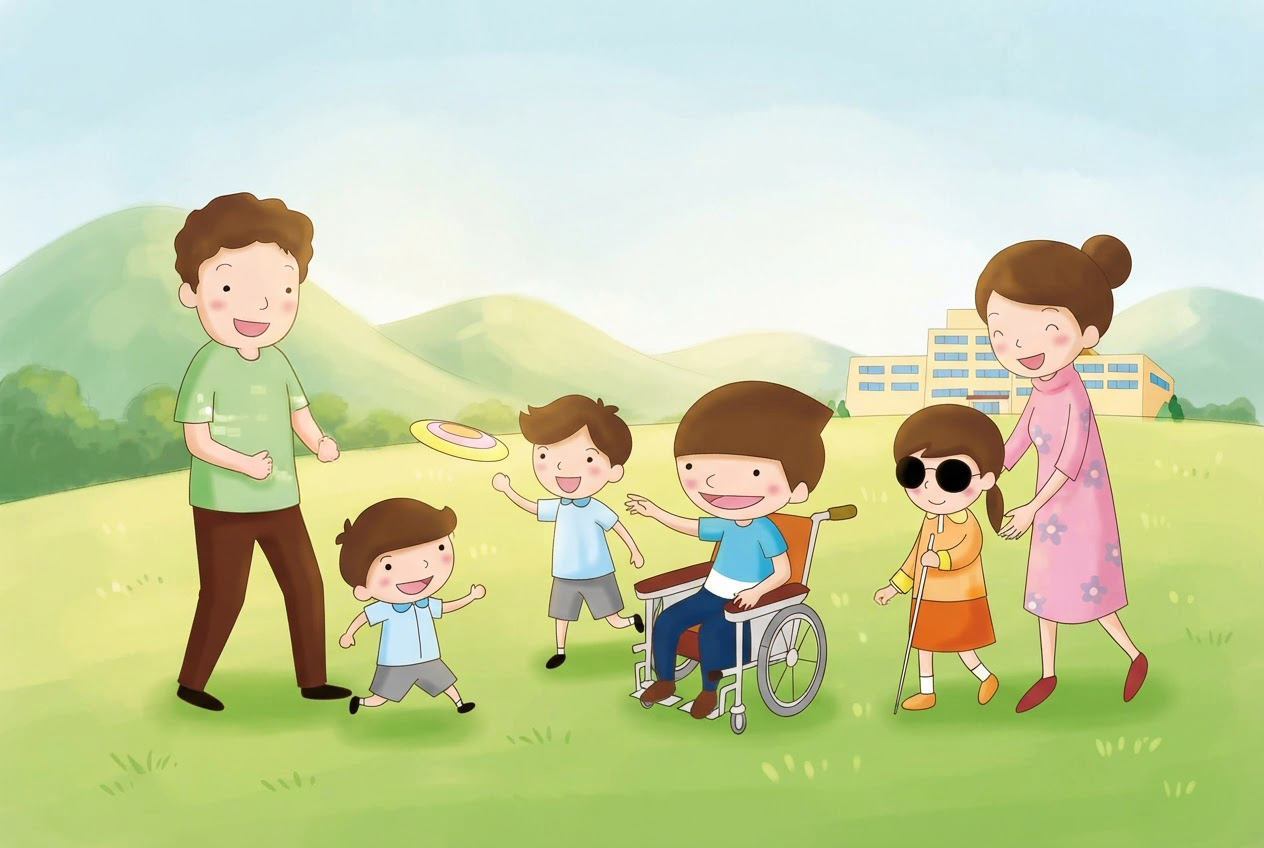




為甚麼要提倡傷健共融?

Why Promote Disability Inclusion?

Every person is unique, with their own preferences, thoughts, and feelings. Disability does not represent a lack of ability; rather, it is part of the diversity of humanity. Whether a person has a disability or not, everyone possesses different strengths and talents. Given the right environment and opportunities, persons with disabilities can, just like everyone else, excel in areas such as learning, the arts, sports, and many other fields, contributing beauty and progress to the world.

However, in real life, many persons with disabilities still lose equal opportunities to participate in society due to physical barriers and invisible prejudice. This is why the concept of “inclusion” is especially important. Understanding and promoting inclusion is a crucial step towards ensuring equal rights for all and building an inclusive society.

《殘疾人權利公約》

Convention on the Rights of Persons with Disabilities (CRPD)

Convention on the Rights of Persons with Disabilities (CRPD)

The United Nations Convention on the Rights of Persons with Disabilities (CRPD) recognises that the inherent dignity and worth of all people are equal and inalienable. These principles form the foundation of freedom, justice, and peace in the world.

The Convention points out that disability is an evolving concept. Disability does not arise solely from an individual’s physical or mental condition, but from the interaction between a person’s impairment and societal attitudes or environmental barriers, which hinder their full and equal participation in society.

The purpose of the CRPD is to promote, protect, and ensure the full and equal enjoyment of all human rights and fundamental freedoms by persons with disabilities. To promote equality and eliminate discrimination, States Parties should take all appropriate measures to provide reasonable accommodation for persons with disabilities.

The CRPD was adopted by the United Nations General Assembly in December 2006 and opened for signature in March 2007. The People’s Republic of China was among the first countries to sign the Convention. The Convention entered into force in May 2008. After China deposited its instrument of ratification with the United Nations on 1 August 2008, the Convention officially came into effect in the People’s Republic of China, including the Hong Kong Special Administrative Region and the Macao Special Administrative Region, on 31 August 2008.

As a party to the Convention, Hong Kong has the responsibility to implement its provisions. Different sectors of society should also work together to put the Convention into practice and create an accessible and inclusive society, where persons with disabilities can pursue their lives equally, free from discrimination, and fully integrate into the community.

Learn More

《殘疾歧視條例》

Disability Discrimination Ordinance (DDO)

Disability Discrimination Ordinance (DDO)

The Disability Discrimination Ordinance (DDO) is legislation enacted by the Hong Kong Government to protect persons with disabilities from discrimination, vilification, and harassment on the grounds of disability.

The Ordinance protects persons with disabilities from discrimination in the following areas:
(i) employment,
(ii) education,
(iii) the provision of goods, services and/or facilities,
(iv) access to premises,
(v) the disposal and/or management of premises,
(vi) participation in clubs and sporting activities, and
(vii) government activities.

The law also protects people associated with persons with disabilities, including spouses, family members, relatives, carers, and individuals with business, sporting, or leisure relationships with them. It is also unlawful to discriminate against or harass a person based on the mistaken assumption that they have a disability.

Learn More

共融,一個都不能少

Inclusion: Leave No One Behind

From the Convention on the Rights of Persons with Disabilities to the Disability Discrimination Ordinance, both the international community and the Hong Kong Government have established important legal foundations to protect the rights of persons with disabilities.

However, building a truly inclusive society cannot rely solely on laws and regulations. It also requires understanding, empathy, and action from the public. We must not only remove physical barriers in the environment, but also break down invisible prejudice in our minds.

By showing greater empathy and respect in our daily lives, we can create opportunities for everyone to realise their potential, contribute to society, and work together towards a more inclusive future for all.

This site is registered on wpml.org as a development site. Switch to a production site key to remove this banner.